Air Duct Cleaning Cost in Timberwood Park (2026): What Homeowners Should Expect

September 16, 2026

Looking for a clear breakdown of Air Duct Cleaning Cost in Timberwood Park (2026) without sales pressure or vague pricing? At Green Air Duct Club, we’ve been helping homeowners understand real-world air duct cleaning costs for years of experience, and we know most people just want a simple checklist: what affects price, what’s included, and what’s worth paying for. We’ve seen everything from lightly dusty systems to heavily contaminated ductwork in larger custom homes across Timberwood Park. If you’re comparing quotes, this guide is for you. Ignoring duct maintenance can lead to higher energy bills and indoor air quality problems. We recently inspected a Timberwood Park home where neglected return ducts were packed with debris, restricting airflow and straining the blower motor. The homeowner thought it was just a filter issue. It wasn’t. For related indoor air topics, see our indoor air quality services.

What Professional Air Duct Cleaning Should Always Include

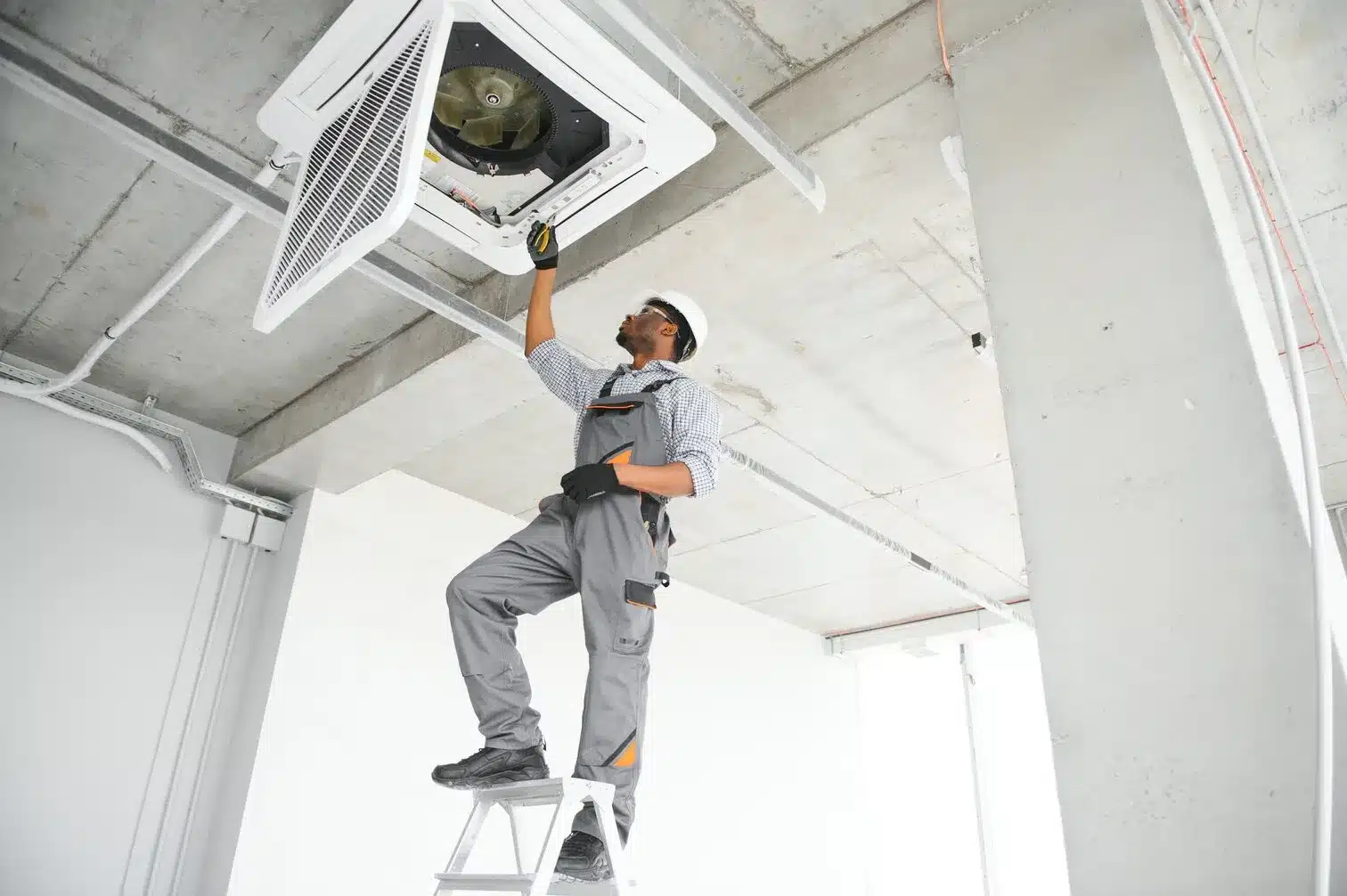
A technician in gray work overalls and safety glasses stands on a white ladder, reaching up to service a ceiling-mounted HVAC unit in an unfinished interior space. He is wearing work gloves and appears to be performing maintenance or installation work on the air conditioning system. The room has exposed concrete ceiling, white walls, and electrical conduits visible overhead.
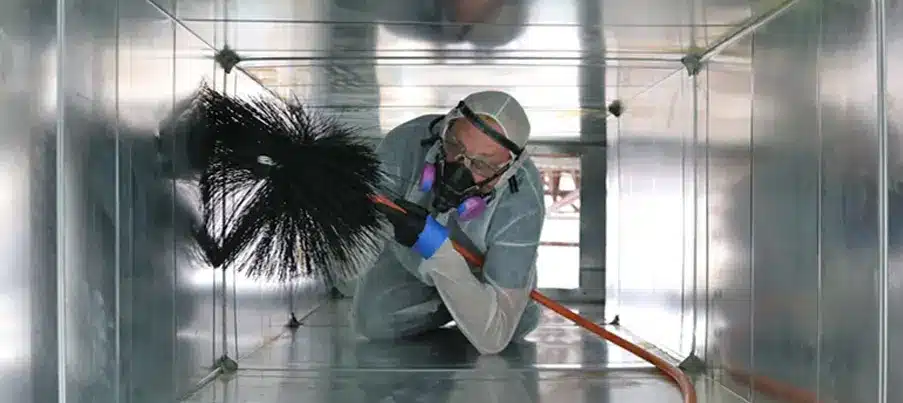
Professional duct cleaning should follow established standards and include the entire HVAC system – not just visible vents. The most important best practice is complete source removal under negative pressure. Partial cleaning leaves debris behind and wastes money. We align our work with NADCA’s ACR Standard because it outlines measurable procedures and verification steps. A thorough service should include:
  • Full system isolation and negative air pressure using HEPA-filtered equipment
  • Mechanical agitation tools such as rotary brushes or compressed air whips
  • Cleaning of supply ducts, return ducts, registers, grilles, and diffusers
  • Inspection and cleaning of blower assembly and accessible evaporator coil surfaces
  • Before-and-after photo documentation
In Timberwood Park, many homes have larger floor plans with multiple return lines. If a contractor quotes a flat low fee without inspecting total vent count or system layout, the scope is likely incomplete. We’ve seen advertisements offering whole-house cleaning at unusually low rates; those jobs often exclude trunk lines or air handler components. Excellent service also avoids unnecessary chemical treatments. Antimicrobial applications should only be used when contamination is confirmed and applied according to EPA label instructions. Overuse can void HVAC manufacturer warranties. A quality provider explains what they’re doing, why they’re doing it, and how it improves airflow and system performance.
What Happens During Ductwork Cleaning

What Influences Pricing and How to Prepare

Air Duct Cleaning Cost in Timberwood Park (2026) typically depends on system size and contamination level rather than a single flat rate. In our experience, most standard residential cleanings may range from $400 to $900. Larger custom homes with multiple HVAC systems can exceed $1,200, especially if heavy buildup or post-construction debris is present. Pricing usually fluctuates based on:
  • Site complexity: Number of vents, accessibility of attic ductwork, multiple systems
  • Material conditions: Flexible duct vs. sheet metal, contamination severity
  • Total scope: Inclusion of blower motor, coil cleaning, or sanitizing treatments
One homeowner scheduled cleaning after a remodeling project but skipped it initially to save money. Construction dust settled throughout the duct system. Months later, supply vents blew fine drywall powder into living spaces, requiring a more intensive cleaning process that took nearly a full day. Most standard homes take three to five hours for a complete service. Larger properties may require a full day. We recommend checking your HVAC manufacturer’s maintenance guidelines – many specify keeping internal components clean to maintain warranty compliance. These figures are preliminary benchmarks for informational purposes only and do not constitute a binding quote. An on-site evaluation is required for a final proposal.
Schedule a Professional Air Duct Evaluation

If you’re comparing quotes or unsure whether your system actually needs cleaning, we recommend starting with a professional evaluation. Our team provides a detailed inspection, explains what we find, and outlines a clear scope of work aligned with recognized industry standards. You’ll know exactly what affects your air duct cleaning cost and whether the service will improve airflow, efficiency, or indoor air quality. We focus on complete system cleaning – not surface-level shortcuts – so your HVAC equipment operates as intended. Whether your home is newer construction or an established property in Timberwood Park, we’ll tailor the approach to your system layout and usage patterns. Schedule an on-site assessment and get straightforward answers before committing to any service.
expert san antonio air duct cleaning services team at work by Green Air Duct Club

FAQs

Most homes benefit from professional air duct cleaning every three to five years, but the timeline depends on usage and indoor conditions. In Timberwood Park, larger homes with multiple return ducts and high HVAC usage during hot months may accumulate dust faster. Homes with pets, recent renovations, or allergy-sensitive occupants often require more frequent inspections. We recommend starting with a visual assessment rather than scheduling blindly. If we see significant debris inside trunk lines or excessive buildup around supply boots, cleaning is justified. If the system is relatively clean, we advise monitoring instead of unnecessary service. Filter maintenance also plays a role. Replacing high-quality pleated filters every one to three months reduces contamination inside ductwork. Staying proactive prevents airflow restrictions and helps protect blower motors and evaporator coils from premature wear.
It can, but only when contamination is affecting airflow. When return ducts are clogged with debris or blower components are coated in dust, static pressure increases. That forces the HVAC system to work harder to move air, which may increase energy consumption. We’ve measured airflow improvements after cleaning heavily contaminated systems, especially where remodeling dust or pet hair buildup was restricting circulation. However, lightly dusty ducts without airflow issues may not show dramatic energy savings. The key factor is whether the buildup interferes with system performance. Cleaning the blower wheel and accessible coil surfaces often has a more direct efficiency impact than simply vacuuming vents. A professional inspection determines whether cleaning will likely produce measurable improvement or if other HVAC maintenance is more appropriate.
The average Air Duct Cleaning Cost in Timberwood Park (2026) may range between $400 and $900 for a standard single-system home. Larger properties with multiple HVAC units or extensive duct runs could exceed $1,200. Pricing typically starts around the lower end for smaller homes with minimal contamination. Costs fluctuate based on:
  • Site complexity, including vent count and attic access
  • Material conditions, such as flexible duct versus rigid metal
  • Total scope, including blower cleaning or antimicrobial treatments
Heavily contaminated systems may require additional labor time and specialized agitation tools, increasing the overall investment. Most standard jobs take three to five hours, while larger homes may require a full day. These figures are preliminary benchmarks for informational purposes only and do not constitute a binding quote. An on-site evaluation is required for a final proposal.
Homeowners can remove and wash vent covers, vacuum around register openings, and replace air filters. Those steps help maintain surface cleanliness. However, full duct cleaning requires specialized equipment that creates negative pressure throughout the system. Portable shop vacuums cannot generate the airflow needed to pull debris from deep trunk lines. Without proper containment, loosened dust can spread into living spaces. Professional technicians use HEPA-filtered vacuum collection units and mechanical agitation tools to ensure debris is fully extracted. DIY attempts sometimes damage flexible ductwork or dislodge connections in attic spaces. We’ve inspected systems where aggressive brushing tore inner duct liners, leading to costly replacements. For surface maintenance, homeowners can handle basic tasks. For comprehensive cleaning that protects HVAC components and indoor air quality, professional service is the safer choice.
Common indicators include visible dust blowing from supply vents, musty odors when the system runs, and excessive debris around return grilles. If you remove a register cover and see thick buildup along duct walls, that’s a sign further inspection is needed. Allergy flare-ups or respiratory irritation can also prompt evaluation, especially after renovations. Construction dust is fine and easily circulates through ductwork if not cleaned. We also check for pest activity. Rodent droppings or nesting materials inside ducts require immediate attention due to contamination risks. In Timberwood Park, attic-installed duct systems can be vulnerable if access points aren’t sealed properly. Regular filter changes, sealing duct leaks, and scheduling periodic inspections reduce the likelihood of severe buildup. Addressing early warning signs prevents strain on HVAC components and avoids more expensive corrective work later.
Many homes in Timberwood Park feature larger floor plans and attic-installed flexible duct systems. Attic heat combined with seasonal HVAC demand can stress connections and accelerate dust accumulation if filters are not changed regularly. We frequently encounter long duct runs serving bonus rooms or additions. Those extended lines can trap debris if airflow is already marginal. In some cases, disconnected or poorly sealed joints allow attic insulation particles to enter the system. Post-construction dust is another common issue in newer developments. Fine drywall particles settle inside return ducts and circulate for months if not properly cleaned. Routine inspections help identify these region-specific concerns early. Proper sealing, adequate filtration, and professional source removal cleaning maintain system performance and indoor comfort in larger residential properties.
Start by verifying alignment with NADCA standards. Companies following the ACR Standard use source removal methods and clean the entire HVAC system – not just vents. Ask whether they use HEPA-filtered negative air machines and mechanical agitation tools. Request proof of insurance and written scope of work outlining exactly what components will be cleaned. Before-and-after photo documentation demonstrates accountability. Be cautious if pricing seems unusually low without an inspection. Incomplete service often excludes trunk lines or air handler components, limiting effectiveness. A reputable provider explains findings clearly and answers technical questions about airflow, static pressure, and system layout. Choosing a qualified professional protects your HVAC equipment and ensures the cleaning actually improves system performance rather than providing only cosmetic results.
Air duct cleaning is rarely an emergency service, but certain conditions warrant prompt scheduling. If you discover rodent contamination, visible mold growth confirmed by testing, or heavy construction debris actively blowing from vents, timely action is advisable. In non-emergency situations, start by replacing the air filter and visually inspecting accessible duct sections. If airflow feels significantly reduced or unusual odors persist when the system runs, schedule a professional evaluation. We do not recommend delaying service when contamination affects indoor air quality or HVAC efficiency. While it may not require same-day intervention, addressing the issue within a reasonable timeframe prevents further buildup and potential component strain. A structured inspection determines whether immediate cleaning or routine scheduling is appropriate.