
Green Air Duct Club · San Antonio Since 2009
Chimney Service in San Antonio — Annual Cleaning and Safety Checks
A San Antonio fireplace that runs four times a year still builds creosote, still collects debris, and still needs a professional inspection before the next fire.
Most homeowners light the fireplace during the short December and January cold snaps, then it sits unused for eleven months. That pattern feels low-stakes — but creosote stacks layer by layer, the cap deteriorates in the summer UV, and animals nest in the off-season. Annual service exists to close that gap before the first fire goes in.
- Level 1 NFPA 211 Inspection
- Full-Flue Creosote Removal
- Available 24/7


Why Low Use Still Matters
San Antonio’s Climate Makes Fireplace Maintenance More Important, Not Less
Mild winters create a false sense of safety — the fireplace rarely runs, so it rarely feels urgent to maintain.
The flue liner — the interior surface that contains combustion gases and directs them out of the home — cracks from temperature swings year-round, not just from fires. Summer attic temperatures climb past 130°F; when a hard freeze follows, clay tile liners expand and contract sharply, and over several seasons that thermal cycling opens hairline cracks. Meanwhile the long off-season leaves the cap exposed to UV and to birds and squirrels looking for a nesting spot.
We see it across the metro — original masonry chimneys in King William and Monte Vista, prefabricated fireplaces in South Side and North Side ranch homes — and have serviced these specific conditions since 2009.
From The Field · Ori Tarzi, Founder
What I Found on a King William Chimney That Looked Fine from the Ground
“A King William homeowner had a beautiful 1920s masonry fireplace, used three or four times the previous winter, not inspected in a few years. Nothing visible was wrong from outside. When we ran the Level 1 inspection — the standard annual inspection defined by NFPA 211 — we found two things they didn’t expect.
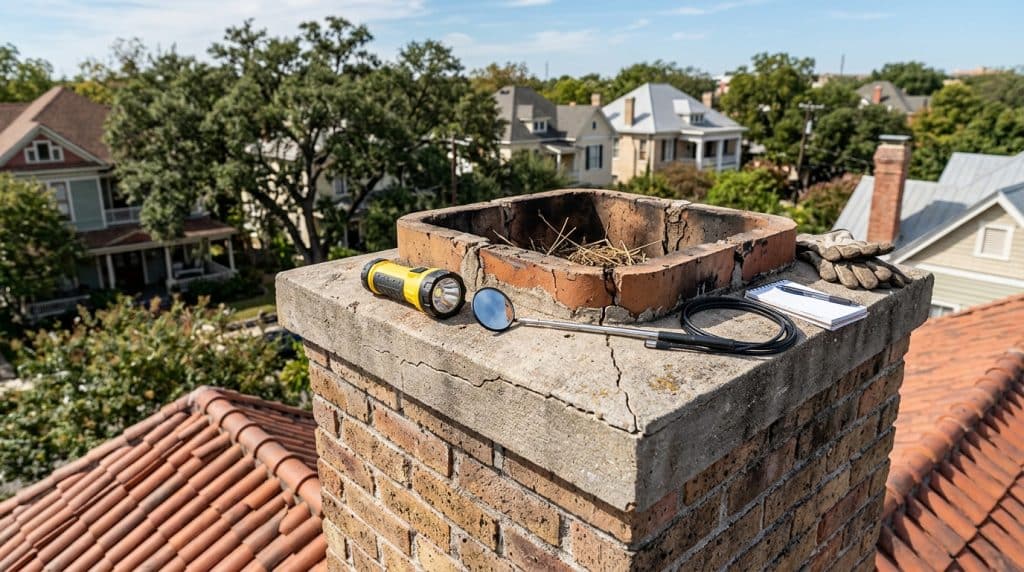
First, the cap had a crack along one side — enough for a family of sparrows to have built a full nest about four feet down. If they’d lit a fire without that inspection, the nest would have ignited inside the flue before the fire got going. Second, a section of clay tile liner had deteriorated mortar between tiles — not a full crack yet, but combustion byproducts would have seeped through that joint into the masonry rather than exhausting cleanly out the top.
We cleared the nest, replaced the damaged cap section, and documented the liner joint for repair prioritization. A compromised flue lets combustion gases into the living space through the same air pathways that circulate through the rest of the home — which matters in a house where the duct system works to maintain air quality year-round. The fireplace looked fine from the outside. That’s almost always how it goes.”
Ori Tarzi
Founder, Green Air Duct Club
One Contractor
One Contractor for Your Chimney and Your HVAC System
A cracked flue liner or blocked chimney introduces combustion byproducts into the living space through the same air pathways the duct system circulates — those aren’t separate systems, they interact. Because we service both the ductwork and the chimney, we can evaluate both in the same inspection. When a chimney finding has implications for indoor air quality — a blocked flue, a deteriorating liner joint, a cap open to the weather for months — we flag it in the context of the whole home’s air pathway, not in isolation. That single-contractor coverage is how we’ve operated since 2009.
Every Visit Covers
What Annual Chimney Service Covers at Every Visit
The flue, cap, liner, and exterior structure — not just the parts that are easy to reach.
Full-Flue Creosote Removal
Every season’s accumulation removed from the full interior flue length — not just the most recent layer.
Cap Inspection & Cleaning
Checked for cracks, displacement, and nest debris from the long off-season, and cleaned.
Level 1 Inspection (NFPA 211)
Visual examination of all accessible interior and exterior components per the NFPA 211 standard for chimneys in continued service.
Flue Liner Assessment
Clay tile liner joints and surface condition documented, with any deterioration flagged.
Firebox & Smoke Shelf Cleaning
Ash, soot, and debris cleared from the firebox and the smoke shelf above it, plus an exterior structure review of mortar, crown, and brickwork.
How It Works
How Our Chimney Service Works
Top-down assessment, cleaning and service, and plain-language documentation.
01
Diagnostic Assessment
We start at the top and work down. The cap is inspected first — condition, fit, and any signs of animal entry or weather damage. Then the Level 1 inspection per NFPA 211, checking all accessible interior and exterior components without equipment removal. Creosote depth is noted, flue liner condition documented, and any blocked sections identified.
02
Cleaning & Service
Creosote is removed from the full flue length with rotary brush equipment, and nest debris, leaf matter, and loose particulate are extracted. The firebox and smoke shelf are cleaned. If the cap requires repair or replacement, we handle it during the same visit rather than scheduling a second trip.
03
Post-Service Documentation
You get a clear summary of what we found and did. Any liner issues, mortar deterioration, or structural observations are noted in plain language — not jargon. If work beyond annual cleaning scope is needed, we explain what it involves and why, so you can make an informed decision.
Where We Serve
Chimney Service Across the San Antonio Metro
From historic masonry chimneys in King William, Monte Vista, and Alamo Heights to prefabricated fireplace systems across the North Side, South Side, Northeast Side, and far northwest Bexar County, we serve the full metro — including ZIP codes 78209, 78210, 78212, and surrounding areas. Scheduling is available 24/7, including ahead of the December fireplace season.
Chimneys Serviced Across Bexar County
- King William
- Monte Vista
- Alamo Heights
- North Side
- South Side
- Northeast Side
- Far Northwest
- 78209
- 78210
- 78212
- Bexar County
- Metro-Wide
Available 24/7
Ready to Schedule Your Annual Chimney Service?
Whether your fireplace runs three times a year or every cold snap, an annual check keeps your flue clear, your cap intact, and your home’s air safe from combustion byproducts. We schedule ahead of San Antonio’s short fireplace season — reach out before it starts.
Prefer email? Reach us at greenairductclubusa@gmail.com. Available 24/7 across the metro.
Common Questions
Chimney Service in San Antonio: FAQ
Once a year is the standard recommendation, even for fireplaces used only a few times per season — NFPA 211 specifies annual inspection for all chimneys in use. In San Antonio, the long off-season between fires gives debris, nesting animals, and cap damage time to accumulate before anyone notices.
Yes. Creosote forms whenever wood burns incompletely, which happens most during short or low-temperature fires — exactly the kind San Antonio’s mild winters produce. Infrequent use doesn’t prevent buildup; it often accelerates it, because the flue never fully warms to the temperature that reduces condensation on the liner walls.
The standard annual inspection defined by NFPA 211. It covers all accessible interior and exterior components without removing equipment or opening walls — firebox, smoke shelf, flue liner, cap, crown, and exterior masonry at accessible points. It’s the appropriate inspection for a chimney in continued, unchanged service.
Nest material is highly flammable. A compacted nest can ignite before the fire in the firebox gets fully established, creating a flue fire inside the chimney rather than at the hearth, and it also blocks draft, pushing smoke back into the living space. Cap inspection and nest clearing are part of every annual service we perform.
Yes. A cracked flue liner, deteriorated mortar joint, or blocked flue lets combustion gases — including carbon monoxide and water vapor — enter the home’s air pathways rather than exhausting cleanly out the top. Because we also service duct systems, we evaluate chimney findings in the context of the whole home’s air circulation when both are inspected together.
We recommend scheduling before November to ensure availability ahead of the December cold snaps — though we’re available 24/7 and can often accommodate same-week scheduling. If you haven’t had your chimney inspected in more than a year and plan to use your fireplace this winter, call to get on the schedule.