
Green Air Duct Club · San Antonio Since 2009
Commercial Dryer Vent Repair in San Antonio — Laundromats, Hotels & Multi-Family
Commercial dryer vent repair addresses longer duct runs, multi-machine configurations, and shared-wall routing that residential work never encounters.
A commercial vent run can extend 25 feet or more through ceiling cavities, shared wall chases, and mechanical spaces. When one section fails, every machine connected to it is compromised at once — and the failure is rarely visible without tracing the full line from each machine collar to the exterior cap. We’ve repaired commercial laundry exhaust systems here since 2009.
- Full-Run Trace First
- Code-Compliant Rigid Metal
- Available 24/7
A Different Scope
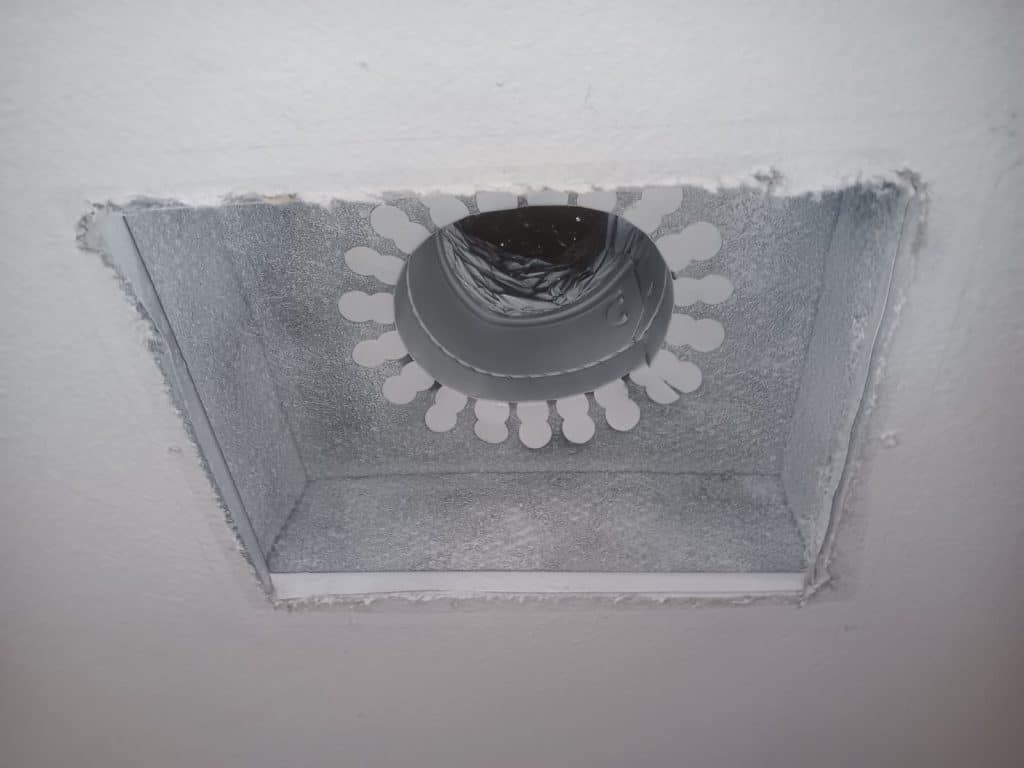
Commercial Dryer Vent Repair Is a Different Scope Than Any Residential Job
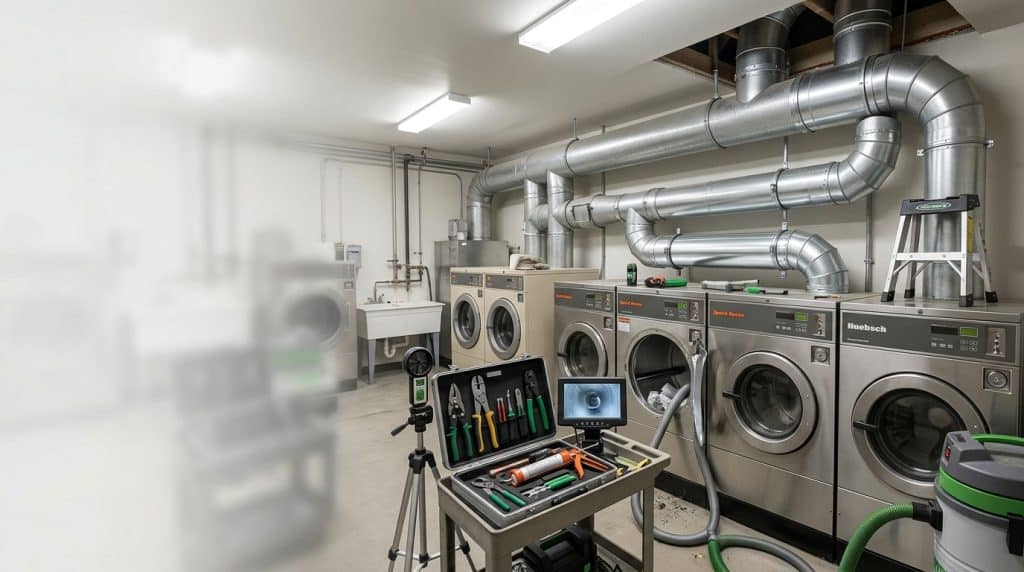
A laundromat running a bank of ten machines. A hotel housekeeping room cycling linen loads from 5 a.m. to 10 p.m. An apartment laundry center with four or six dryers venting through a single shared wall chase. These aren’t residential situations with more machines — they’re structurally different environments with different duct configurations, different failure modes, and different consequences when a section separates or collapses.
San Antonio Configurations
A Multi-Family and Hospitality Market With Specific Vent Configurations
San Antonio’s growing apartment sector and active hospitality corridor put commercial vent systems under sustained thermal stress no residential line faces.
Multi-family housing along the Northwest Side, Westover Hills, and the 1604 growth corridor includes hundreds of complexes with shared laundry centers. Their runs travel through shared wall cavities or up through roof assemblies with commercial-grade caps that must handle airflow from multiple machines — a residential-grade cap on a multi-machine line restricts flow across every dryer in the group.
Hotels near the airport and convention district run linen loads 15+ hours a day across multiple machines, accumulating lint at a rate that accelerates joint separation inside wall-mounted runs. Those failures don’t announce themselves — they build over weeks until a machine trips a thermal cutout or a vent stops exhausting correctly.
From The Field · Ori Tarzi, Founder
What I Find Inside Commercial Vent Runs Before a Repair Gets Scoped
“The failure a facilities manager calls about is rarely the only failure in the line. A Northwest Side apartment supervisor called about three dryers running long — 45-minute cycles taking over an hour. He thought the machines needed service.
I pulled the exterior termination cap first. The damper was jammed open with lint — one problem. Then I traced each run back from the cap, and two of the three had a separated joint inside the wall cavity, discharging lint-laden exhaust directly into the shared wall space next to a storage area. The cap alone would’ve been a 20-minute fix, but the separated joints were the real reason the system was failing.
That’s why we trace the full run — from each dryer collar to the exterior termination — before any scope is written. In multi-machine rooms, runs share more wall space than any floor plan shows, and a failure in one almost always stresses the joints in adjacent runs. We look at all of them.”
Ori Tarzi
Founder, Green Air Duct Club
Code Compliance
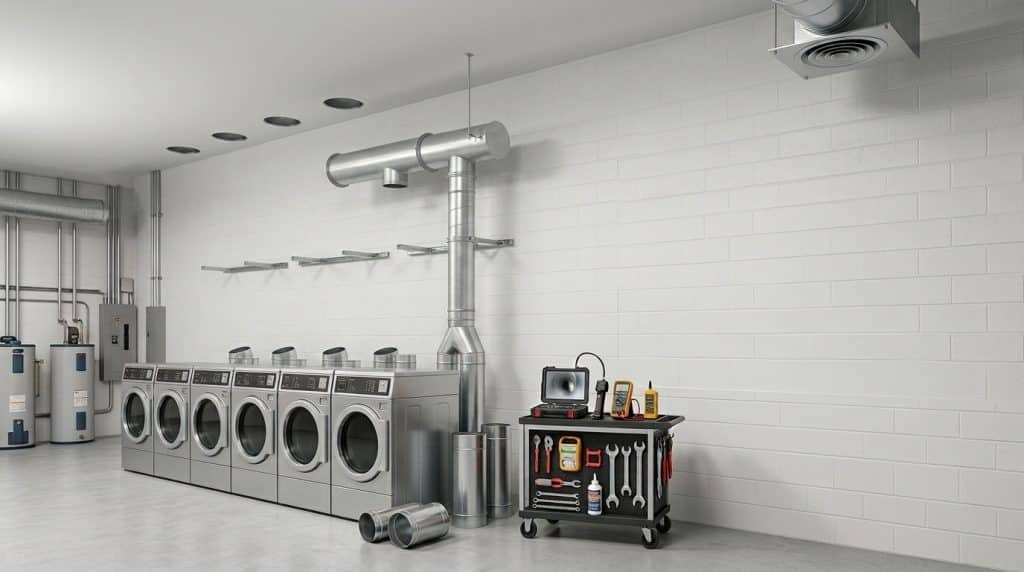
Rigid Metal Duct Is the Only Code-Compliant Material for Commercial Laundry Exhaust
Flexible vinyl and foil accordion duct are prohibited in commercial laundry environments under fire code. Commercial machines run longer cycles at higher temperatures more frequently than any residential dryer — flexible material can’t withstand that thermal load, accumulates lint faster on its ribbed walls, and sags and kinks between supports. When we complete a repair, non-compliant flexible material is replaced — not patched — with rigid metal duct sized and routed to maintain the airflow the system requires.
Our Commitments
Commercial Dryer Vent Repair Commitments
Every repair leaves the vent run in code-compliant condition — correct material, correct routing, and a verified exhaust termination cap.
Rigid Metal Duct Throughout
No flexible vinyl, no foil accordion material, no exceptions for commercial laundry applications.
High-Temp Sealed Joints
Joints sealed with mastic or metal tape rated for dryer-exhaust temperatures — not standard HVAC tape.
Corrected Routing
Each run is routed to eliminate the sags, sharp bends, and unsupported spans that caused the original joint separation.
Verified Termination Cap
The exterior cap is inspected and replaced if the damper, screen, or housing doesn’t meet commercial airflow ratings.
Every Collar Checked
Every machine’s exhaust collar connection is checked before the job closes — not only the section that was repaired.
The Sequence
How Commercial Dryer Vent Repair Gets Executed
Repair scoping, material replacement, and airflow verification — in that sequence, without shortcuts.
01
Full-Run Diagnostic First
Every repair starts with a full-run trace — we pull the exterior cap and work back to each dryer collar, documenting every joint, bend, and section through wall or ceiling chases. That documentation becomes the scope; nothing gets added after the job starts. Any flexible vinyl or foil duct found anywhere is flagged for replacement in the same visit.
02
Material Replacement & Routing
Work proceeds collar-outward. Separated joints are reconnected and sealed; collapsed sections replaced with correctly sized rigid metal duct, supported at required intervals; sharp bends rerouted. In shared wall chases we sequence by run — each machine’s line completed and verified before the next, so no machine exhausts into a partially open run.
03
Airflow Verification at Every Cap
We confirm airflow at the exterior termination for every run serviced, verify each collar connected and sealed, and check that every commercial cap’s damper opens freely under airflow and closes when the machine cycles off. We don’t close the job until every machine exhausts fully from collar to cap.
Where We Serve
Commercial Dryer Vent Repair Across the San Antonio Metro
We complete commercial repair calls at apartment complexes along the Northwest Side and Westover Hills, hotels near the airport and convention district, laundromats across the South Side and Northeast corridors, and assisted living facilities throughout Bexar County. Scheduling is available 24/7, including after-hours and weekend access for facilities that run continuous laundry cycles.
Commercial Laundry Facilities Across Bexar County
- Northwest Side
- Westover Hills
- 1604 Corridor
- Airport Hotels
- Convention District
- South Side Laundromats
- Northeast Corridor
- Assisted Living
- Downtown
- Bexar County
Available 24/7
Schedule Repair That Covers the Full Run
We trace every dryer vent run in your facility before scoping a single repair — so you know what you’re fixing before any work begins. Tell us your facility type, the number of dryer units, and the best access window, and we’ll plan the visit around your operating schedule.
Prefer email? Reach us at greenairductclubusa@gmail.com. Available 24/7 across the metro.
Common Questions
Commercial Dryer Vent Repair in San Antonio: FAQ
Commercial runs are longer, pass through shared wall chases and ceiling cavities, and connect to machines under higher thermal load and longer daily cycles. A residential repair is usually one machine with a short run to a nearby exterior wall; a commercial repair may involve multiple machines, runs over 25 feet, shared caps, and routing through building assemblies that require coordination with your maintenance schedule. The failure modes, required materials, and scope of a proper trace-and-repair all differ.
Only the sections that are failed, non-compliant, or restricting airflow are replaced — but the full run is traced before any scope is written. In commercial laundry environments, a single joint failure frequently signals stress on adjacent connections in the same wall chase, so we identify every problem point on the first visit to make the scope complete before work begins.
Flexible vinyl and foil accordion duct aren’t code-compliant for commercial dryer exhaust. If we find either during a repair, it’s replaced — not patched — with rigid metal duct sized for the airflow of the machines connected to that run. It’s not an upsell; it’s a condition of closing a compliant repair.
We offer after-hours and weekend scheduling across the metro for exactly this reason. When you call, tell us your operating hours and the window when machines are least active — we schedule the repair around your facility’s schedule rather than ours.
It depends on the number of machines, the length and routing of each run, and how many failure points the trace identifies. A single-machine wall-mounted run may take under two hours; a six-machine room with runs through a shared ceiling chase and multiple joint failures may take a full day. We provide a time estimate after the initial trace, before repair work begins.
Yes. We serve assisted living, senior housing, and other regulated commercial properties throughout Bexar County. These often require documentation for compliance records, so we provide post-repair documentation confirming materials used, runs serviced, and airflow verification at each termination point — deliverable at job close.