
Green Air Duct Club · San Antonio Since 2009
Chimney Repair in San Antonio — Cracks, Crown Damage, and Liner Issues
Chimney repair fixes four specific failure points — not just the one you can see.
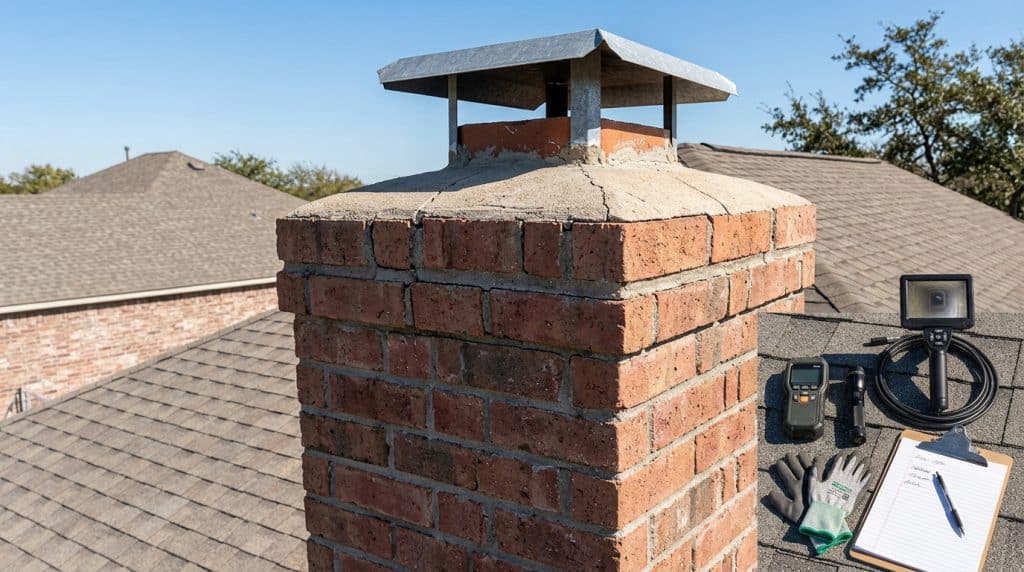
We inspect all four failure locations — the crown, brick face, mortar joints, and flue liner — before any repair scope is written, so one visit addresses every active deterioration point. Most visible damage traces back to moisture entering through a surface that failed years earlier, so we start at the top and work down.
- All Four Points Inspected
- Correct Repair Sequence
- Post-Freeze Availability
The Stress Cycle
San Antonio’s Climate Puts Masonry Chimneys Through a Specific Stress Cycle
San Antonio’s weather pattern is harder on chimneys than most homeowners realize.
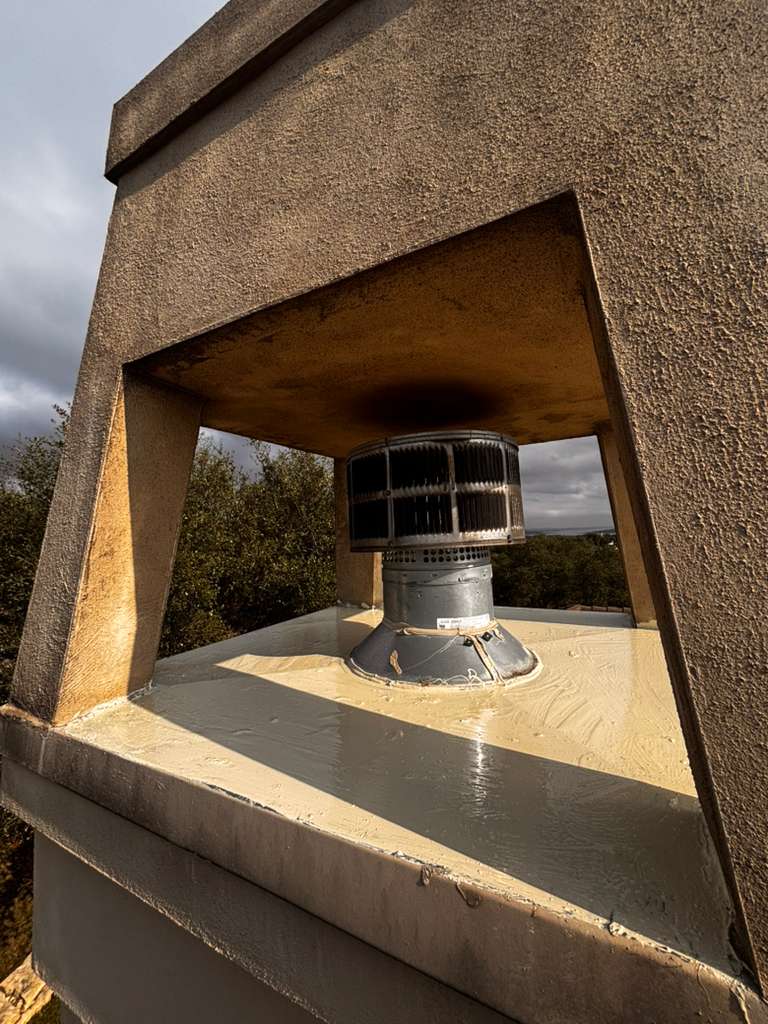
Summer attic temperatures above 140°F expand mortar joints and clay tile liners for months. Then an Arctic intrusion arrives — sometimes dropping 50 degrees in under 24 hours — and those same materials contract fast. Repeat that over several years and hairline cracks open in crowns and mortar joints wide enough to admit moisture. It’s not one hard freeze that does the damage; it’s the contrast between months of expansion and a sudden hard contraction.
Gradual seasonal transitions elsewhere give masonry time to adjust — San Antonio doesn’t. We’ve watched this pattern play out the same way across neighborhoods since 2009, from historic stacks in King William to prefab surrounds on the Northeast Side.
From The Field · Ori Tarzi, Founder
The Four Chimney Failure Types We Repair in San Antonio Homes
“Over fifteen-plus years of inspections here, the same four failures appear again and again. They don’t always show up together, but when one is present the others are worth checking.
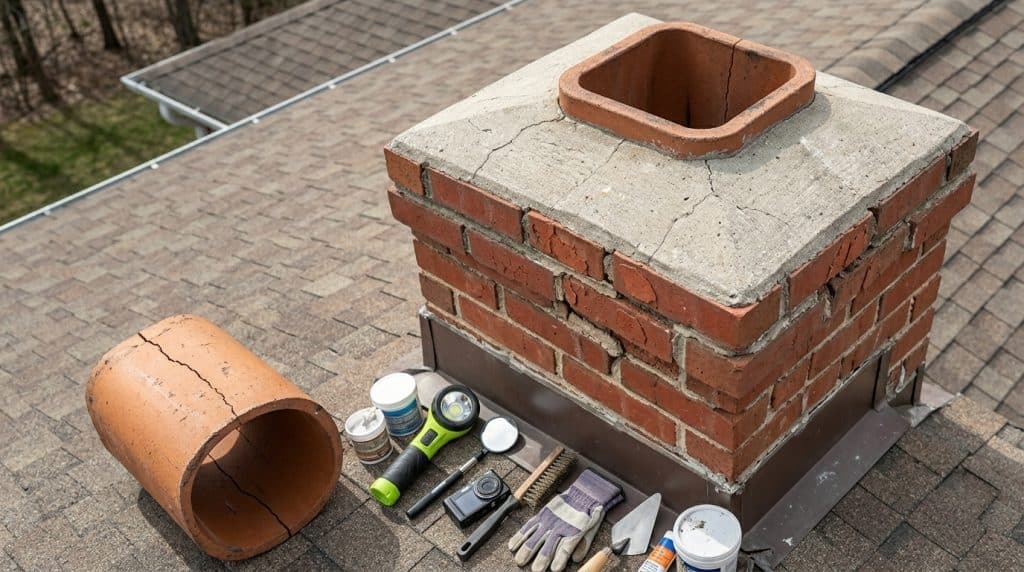
Crown damage — the sloped cap around the flue opening — is the first surface to absorb rain and UV, and San Antonio crowns crack within ten to fifteen years. That crack is the primary moisture entry point. Spalled brick — faces breaking away from the body — follows seasons of moisture entry, not a single freeze; we trace the moisture path before installing new brick. Mortar joint deterioration lets water into the brick core, and tuckpointing restores the watertight seam — done after crown repair, before liner inspection.
Flue liner cracks are the most consequential: a cracked clay tile liner lets combustion gases, including carbon monoxide, migrate through masonry into wall cavities or the attic instead of exhausting at the top. The same thermal-cycling stress that cracks crowns cracks liners — and relining eliminates that gas-migration pathway before the fireplace is used again.”
Ori Tarzi
Founder, Green Air Duct Club
Complete Assessment
A Complete Assessment Before Any Repair Is Scoped
Repairing a crown without inspecting the liner leaves the most dangerous failure untouched. We inspect all four failure points on the first visit — crown, brick face, mortar joints, and flue liner — and produce a plan that addresses every active deterioration point we find. Crown damage and liner cracks frequently exist in the same chimney at the same time; a homeowner who gets a crown repair without a liner inspection may have a correctly patched top and a compromised flue. If the liner is intact and the crown is the only problem, we’ll tell you that directly — the inspection determines the scope, not the other way around.
Repair Standards
Our Chimney Repair Standards for Every San Antonio Job
Every repair meets the same material and process standards.
Waterproof Crown Resurfacing
A flexible, waterproof crown-coat product rated for exterior masonry — not standard mortar, which cracks under thermal cycling.
Matched Spalled-Brick Replacement
New brick matches existing coursing, with mortar mixed to the correct compressive strength for San Antonio’s climate.
Correctly Matched Tuckpointing
Tuckpointing mortar is matched to the hardness of the existing brick — mortar harder than the brick causes the brick to fail, not the joint.
Multi-Level Liner Assessment
Visual inspection and, where access allows, physical evaluation of tile condition at multiple flue levels — not a ground-level look.
Moisture Pathways Addressed First
Every moisture intrusion pathway found during inspection is addressed before surface repairs, with 24/7 post-freeze inspection availability.
Three Stages
How Our Chimney Repair Process Works
Every job moves through the same sequence.
01
Diagnostics
We inspect from the crown down — the concrete crown for cracking, the brick face for spalling, mortar joints at multiple course levels, and the flue liner for visible fracturing — and document everything before any plan is written. You see the findings before the scope is confirmed.
02
Implementation
Repairs follow the correct sequence: crown before mortar joints, mortar joints before liner work, liner before the fireplace returns to service — so new repairs aren’t undermined by moisture entering above them. Materials are selected for San Antonio’s cycle between 140°F summer attic heat and sub-freezing Arctic intrusions within the same year.
03
Post-Service Testing
We verify the crown seal, check repaired mortar joint continuity, and confirm the flue opening is clear and unobstructed. If liner repair was in scope, we walk you through the work and confirm when the fireplace is safe to use. We confirm the outcome — we don’t close out on an assumption.
Service Area
Chimney Repair Across the San Antonio Metro
We serve historic masonry chimneys in the King William District and Monte Vista, prefabricated fireplace systems in mid-century homes across the Northeast and South Sides, and newer gas-fireplace surrounds throughout the Stone Oak and Helotes corridors. 24/7 scheduling is available across all of these areas — including urgent post-freeze inspections after an Arctic intrusion.
Chimney Repair Across Bexar County
- King William District
- Monte Vista
- Northeast Side
- South Side
- Stone Oak
- Helotes
- Alamo Heights
- Historic Masonry
- Prefab Fireplaces
- Bexar County
Available 24/7
Schedule Your Chimney Repair in San Antonio
We inspect all four failure points on the first visit and scope the repair around what we actually find. Tell us what you’re seeing — white staining, recessed mortar, spalled brick, a suspected liner crack — and we’ll get your chimney on the schedule. Available 24/7, including post-freeze.
Prefer email? Reach us at greenairductclubusa@gmail.com. Available 24/7 across the metro.
Common Questions
Chimney Repair in San Antonio: FAQ
The most common ground-level signs are white staining on the brick (efflorescence from water moving through the masonry), mortar joints that look recessed or missing, and spalled brick faces near the top of the stack. If any are visible, the crown is worth inspecting — a cracked crown is typically the moisture entry point that produces all three.
If the fireplace is in active use and a liner crack is suspected, the repair is urgent — a cracked flue liner lets combustion gases including carbon monoxide migrate into wall cavities rather than exhausting at the top. Crown damage and mortar deterioration without liner cracking carry less immediate risk, but waiting lets moisture damage progress through additional brick courses each season.
Tuckpointing removes deteriorated mortar from the joints between brick courses and replaces it with fresh mortar. Run your finger along a joint — if mortar comes away easily, crumbles, or shows visible gaps, it has lost its watertight integrity. San Antonio chimneys in the 20-to-30-year range frequently need tuckpointing on the upper courses first, where UV and moisture exposure is greatest.
It depends on the extent and location of the cracking. Isolated cracks in accessible tile can sometimes be repaired with a heat-resistant liner sealant. Widespread fragmentation, tile collapse, or cracks at the base of the flue typically require relining — a new clay tile liner or a stainless steel insert. We assess this during the inspection and give a specific recommendation based on what the liner actually shows.
Yes. Gas fireplaces still produce combustion byproducts that exhaust through a flue, the liner is still subject to thermal-cycling stress, and the crown still absorbs UV and moisture. They produce less creosote than wood-burning units, but the masonry and flue liner need the same inspection and maintenance — the absence of creosote doesn’t mean the structure is in good condition.
Annual inspection is the standard recommendation from the Chimney Safety Institute of America, and it’s particularly relevant here because of the year-round thermal-cycling stress on crown and liner materials. An inspection after any significant Arctic intrusion is also worth scheduling — hard freezes that drop temperatures rapidly can open cracks in crowns and liner tile that weren’t present before.