Commercial Air Duct Cleaning Cost in Timberwood Park (2026): Myths, Standards, and Real Pricing Factors

July 6, 2026

Many facility managers assume commercial air duct cleaning is a flat, low-cost service that any contractor with a vacuum can handle. At Green Air Duct Club, we’ve been helping local businesses understand commercial air duct cleaning cost in Timberwood Park (2026) for years of experience, and we’ve seen how that misconception leads to budget surprises and compliance issues. Our team regularly evaluates offices, retail spaces, and medical suites throughout Timberwood Park where pricing varies widely based on system design and contamination levels. We recently inspected a property where a low-cost provider skipped negative air containment and source removal. Within months, dust re-accumulated and tenant complaints increased, leading to a second, properly executed cleaning. The building owner ultimately paid twice. If you’re reviewing your HVAC maintenance plan, our commercial air duct cleaning overview explains how proper scope protects both air quality and long-term operating costs.

Standards, Equipment, and Process That Protect Your Investment

The most important best practices in commercial duct cleaning revolve around containment, verification, and documentation. Without those three elements, the service becomes cosmetic rather than corrective. We structure every project around NADCA’s ACR Standard and manufacturer guidelines for air handlers and coils. A professional service should include:
  • Pre-cleaning inspection with camera scoping of supply and return trunks.
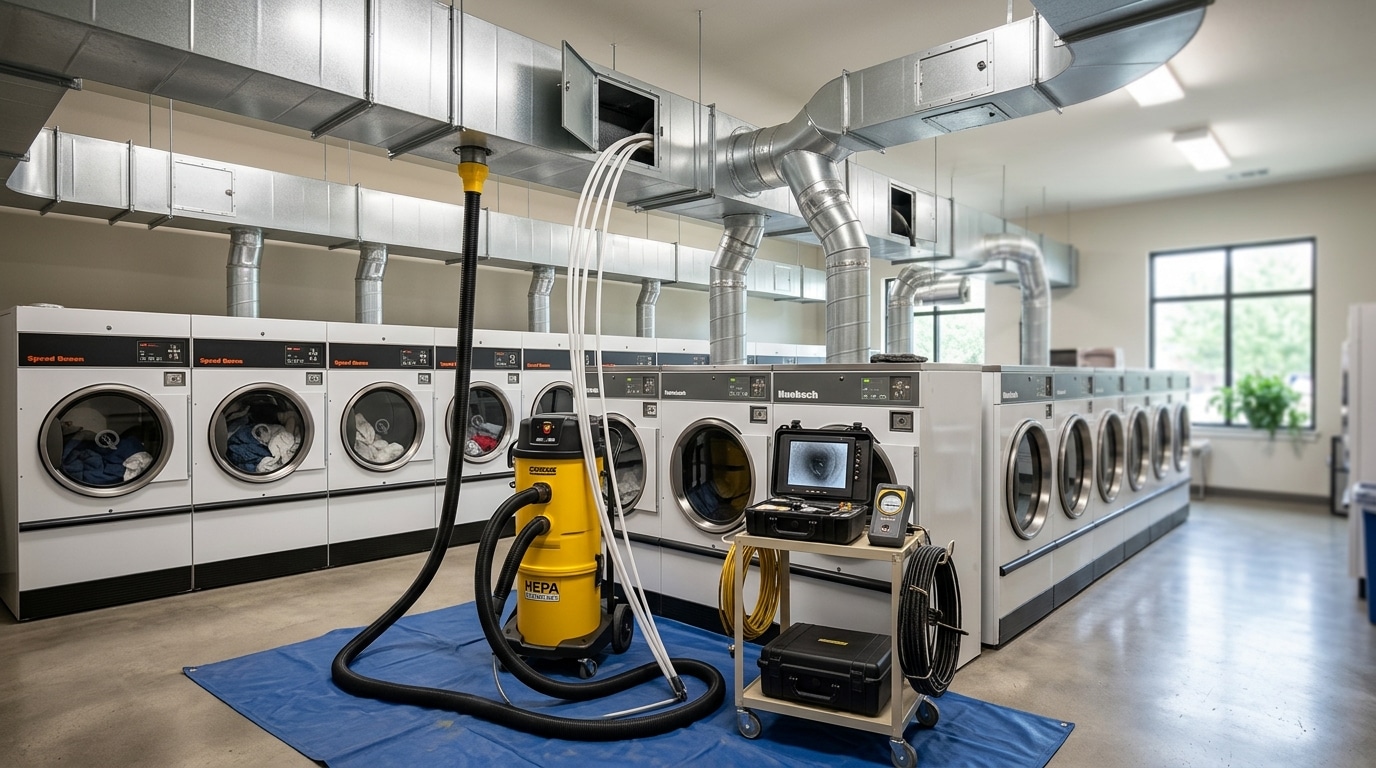
  • Establishing negative pressure using HEPA-filtered vacuum collection devices vented outdoors or through certified filtration.
  • Mechanical agitation with rotary brush systems, compressed air whips, or skipper balls matched to duct material (sheet metal vs. flex duct).
  • Cleaning of air handler components: blower assembly, drain pan, and evaporator coil when accessible.
  • Post-cleaning verification and photo documentation.
We avoid aggressive brushing on aging flex duct because it can tear the inner liner. In those cases, we may recommend partial duct replacement instead of forced cleaning. When a provider offers a price without inspecting system size, number of VAV boxes, or rooftop unit configuration, that usually signals an incomplete scope. In Timberwood Park, many commercial buildings use rooftop package units exposed to dust and seasonal pollen. Proper sealing of access panels and insulation repair after cleaning prevents conditioned air loss and moisture intrusion. Quality work should leave you with documented proof, not just cleaner-looking vents.
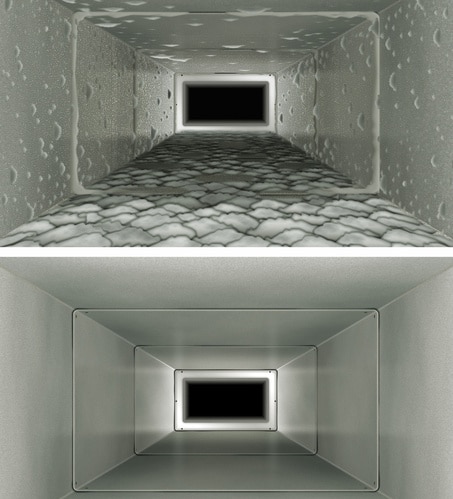
Two perspective views of an industrial duct or tunnel with concrete walls and floor. The top image shows a textured or patterned floor surface leading toward a rectangular light opening in the distance, while the bottom image displays a smooth, plain floor with similar architectural perspective and lighting. Both views illustrate depth and vanishing point photography of what appears to be HVAC ducting or underground infrastructure.

What Drives Commercial Air Duct Cleaning Cost in Timberwood Park (2026)

Accurate budgeting starts with understanding what actually drives cost. Commercial duct systems vary widely in size and complexity, and pricing reflects labor intensity, equipment use, and contamination level. In our experience, small office suites under 5,000 square feet may range from $1,200 to $3,000. Mid-sized commercial properties might fall between $3,000 and $8,000. Large multi-zone facilities with multiple rooftop units can exceed $10,000 depending on scope. Projects typically take one to three days, though complex systems may extend longer. Key cost variables include:
  • Site complexity: Number of air handlers, duct length, ceiling height, and access constraints.
  • Material and system type: Sheet metal ducts clean differently than flex or fiberglass-lined ductwork.
  • Total scope: Inclusion of coil cleaning, antimicrobial treatments (when justified), and post-cleaning verification reports.
A property manager once postponed cleaning to reduce annual expenses. Within a year, heavy debris accumulation restricted airflow and contributed to a blower motor failure. The replacement motor and downtime cost more than the original cleaning estimate. These figures are preliminary benchmarks for informational purposes only and do not constitute a binding quote. An on-site evaluation is required for a final proposal.
Schedule a Detailed Commercial Duct Assessment

If you’re evaluating Commercial Air Duct Cleaning Cost in Timberwood Park (2026), the fastest way to avoid overpaying or under-scoping is a structured site review. We provide camera inspections, system measurements, and a clear breakdown of labor, equipment, and optional services so you understand exactly what you’re funding. Our team documents system condition, identifies code or standard gaps, and outlines a practical maintenance schedule aligned with your occupancy type. That allows you to plan cleaning around business hours and reduce disruption. A clear scope protects your HVAC investment and gives you defensible documentation for tenants, partners, and insurers. Let’s review your building and provide a transparent, standards-based assessment.
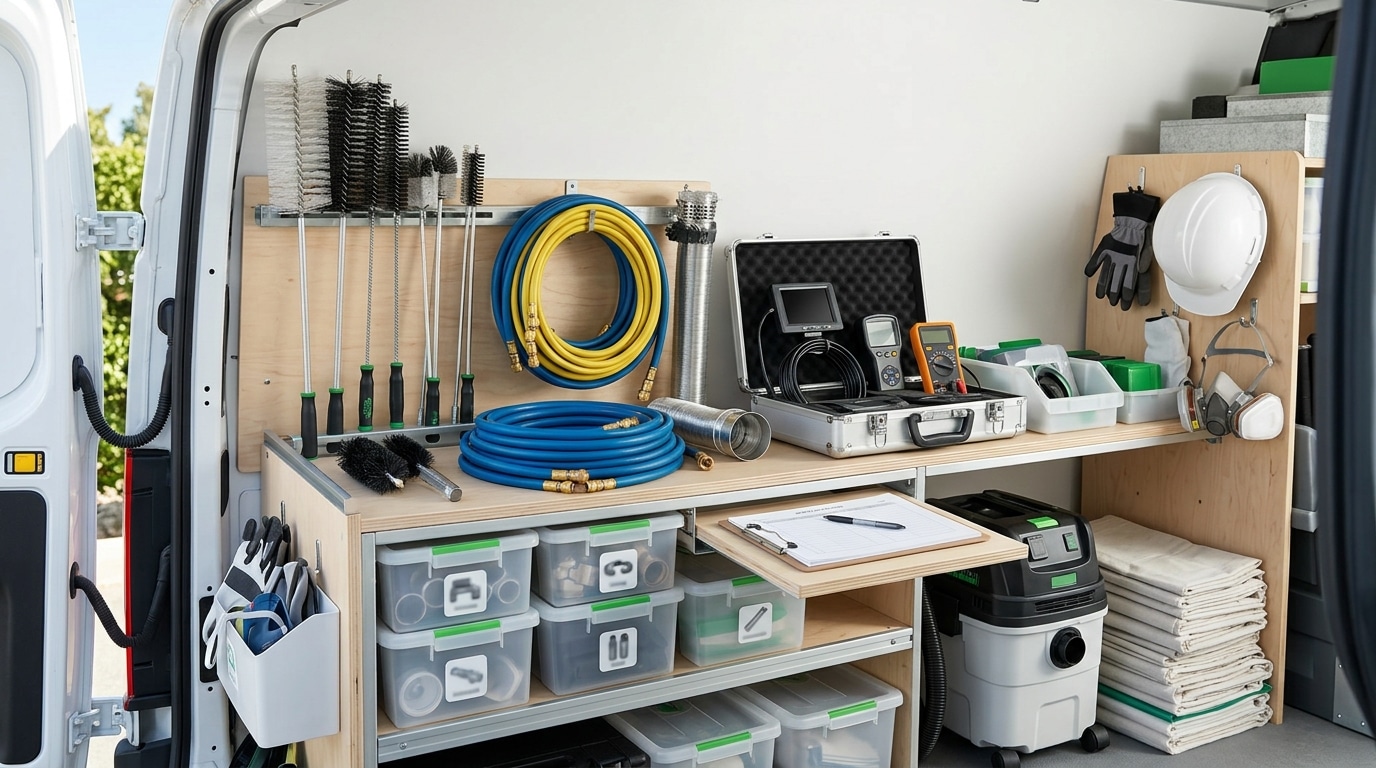
A well-organized service van interior displays a comprehensive collection of professional tools and equipment mounted on wooden storage panels. The workspace includes various brushes and cleaning supplies on a magnetic strip, coiled hoses, electrical testing equipment in cases, a white hard hat, work gloves, and multiple clear plastic storage containers with labeled contents arranged on shelves below. The setup appears designed for a skilled tradesperson, possibly an electrician or HVAC technician, with everything neatly organized for easy access and portability.

FAQs

Cleaning frequency depends on building use, filtration quality, and environmental exposure. Office buildings with high-efficiency filters and consistent maintenance may only require cleaning every three to five years. Restaurants, medical clinics, and facilities with higher particulate loads may need inspections every one to two years. In Timberwood Park, seasonal pollen and dust can accelerate buildup in rooftop package units and return ducts. We recommend scheduling a camera inspection before committing to full cleaning. NADCA emphasizes condition-based cleaning rather than arbitrary timelines. If we observe visible debris accumulation, microbial growth, or airflow restrictions confirmed by static pressure readings, cleaning is justified. If ducts are relatively clean, we document that and recommend continued monitoring instead of unnecessary work. A structured inspection plan prevents overspending while protecting indoor air quality and equipment longevity.
A complete service follows NADCA’s ACR Standard and focuses on source removal. That means establishing negative pressure with HEPA-filtered equipment, mechanically agitating interior duct surfaces, and cleaning accessible HVAC components such as blower assemblies and drain pans. Simply vacuuming vent openings does not meet professional standards. We also perform pre- and post-cleaning inspections using camera systems to verify results. Access panels are sealed after service to prevent air leakage. When contamination is significant, we may recommend coil cleaning using manufacturer-approved coil cleaners to restore heat transfer efficiency. Documentation is a critical part of the process. Facilities benefit from before-and-after photos and a written report outlining scope, methods, and findings. This protects building owners if tenants question air quality and supports preventive maintenance planning.
Commercial air duct cleaning cost in Timberwood Park (2026) may range widely depending on facility size and system design. Smaller office spaces might start around $1,200, while mid-sized buildings could range between $3,000 and $8,000. Larger or multi-unit facilities can exceed $10,000 when additional components are included. Pricing fluctuates based on:
  • Site complexity, including duct length, ceiling access, and number of rooftop units.
  • Material costs related to replacement access panels, insulation repair, or specialty filtration.
  • Total scope, such as coil cleaning, antimicrobial application when appropriate, and reporting requirements.
Most projects take one to three days, though large systems may extend beyond that. These figures are preliminary benchmarks for informational purposes only and do not constitute a binding quote. An on-site evaluation is required for a final proposal.
Basic maintenance such as changing filters, wiping accessible grilles, and monitoring drain pans can be handled internally. However, full commercial duct cleaning requires specialized negative air machines, agitation tools, and containment procedures that most facilities do not have. Without proper equipment, attempting to clean ducts can dislodge debris without capturing it, spreading contaminants through occupied spaces. Professional-grade HEPA filtration and controlled pressure differentials are essential to prevent cross-contamination. We encourage facility teams to handle routine filter replacements using manufacturer-recommended MERV ratings and to schedule professional inspections when buildup is suspected. That balanced approach protects indoor air quality while reserving technical cleaning for trained crews with proper documentation and insurance coverage.
Common warning signs include visible dust discharge from supply vents, musty odors when systems start, unexplained allergy complaints among occupants, and rising energy bills without other mechanical changes. We also look for debris accumulation in return plenums and excessive buildup on blower blades. Static pressure readings outside manufacturer-recommended ranges can signal airflow restriction. During inspections, we use borescopes to check for matted dust, construction debris, or microbial growth inside trunk lines. If your facility recently completed renovations, drywall dust and construction particles often settle in ducts. Scheduling a post-construction cleaning protects equipment and improves occupant comfort. Acting early prevents heavier accumulation that requires more labor-intensive removal later.
In Timberwood Park, rooftop HVAC systems are common in commercial properties. These units are exposed to dust, pollen, and seasonal debris, which can enter return ducts if filtration is inadequate. We frequently see insulation deterioration around rooftop penetrations, allowing contaminants into the system. Another local factor is temperature variation. Extended cooling seasons increase system runtime, drawing more airborne particles into ductwork. Buildings near ongoing development may also experience elevated construction dust levels. Routine inspections help identify these localized issues early. Sealing duct joints, maintaining proper filter schedules, and ensuring rooftop units are weather-protected all contribute to longer system life and improved indoor air quality.
Look for contractors who follow NADCA standards and can clearly explain their cleaning methodology. Ask whether they use HEPA-filtered negative air equipment and mechanical agitation tools appropriate for your duct type. A professional should provide proof of insurance and be willing to document system condition with photos. Be cautious if pricing is provided without a site visit or if the proposal excludes cleaning of air handlers and key components. Incomplete scope often leads to repeat contamination. Request a written scope of work outlining containment procedures, estimated timeline, and post-cleaning verification steps. Clear documentation protects your facility and ensures accountability throughout the project.
If you suspect buildup but there are no immediate health hazards, start with a visual inspection of accessible vents and review recent maintenance records. Replace filters with the correct MERV rating recommended by your HVAC manufacturer and monitor system performance. Schedule a professional camera inspection to confirm internal duct conditions. This avoids unnecessary cleaning if contamination is minimal while identifying areas that truly require attention. Watch for persistent odors, visible dust discharge, or occupant complaints. Those signals justify prompt evaluation, though not emergency service. A structured assessment allows you to plan cleaning during off-hours and coordinate with tenants, minimizing disruption while addressing the root cause.