How to Improve Indoor Air Quality During Texas Allergy Season: A Practical Buyer’s Guide

May 5, 2026

At Green Air Duct Club, we’ve been helping homeowners navigate How to Improve Indoor Air Quality During Texas Allergy Season for years of experience, and we’ve seen how confusing the options can feel. Should you upgrade filters, add UV lights, clean ducts, or buy a portable purifier? In Boerne, we often walk into homes where cedar pollen has coated return grilles and clogged filters long before the owner realized airflow had dropped. Many homeowners assume a single air purifier will solve everything. In reality, untreated duct buildup and oversized filter upgrades can restrict airflow, strain the blower motor, and increase energy bills. One Boerne homeowner learned this after installing a high-MERV filter without checking static pressure – comfort dropped, and allergies didn’t improve. A smart plan starts with understanding your system. We explain the basics in our HVAC air duct guide before recommending upgrades.

How to Compare Filtration, Purification, and Ventilation Options

Strong indoor air quality plans combine filtration, humidity control, and source removal. No single device solves pollen, dust, pet dander, and mold simultaneously. The best results come from layered improvements matched to your HVAC capacity. When comparing options, focus on measurable performance and professional installation standards:
  • High-MERV media filters (MERV 11 – 13): Effective for pollen and dust; must verify static pressure stays within manufacturer limits.
  • HEPA bypass systems: Capture 99.97% of particles at 0.3 microns; require dedicated duct runs and proper balancing.
  • UV-C lights (coil-mounted): Help control microbial growth on evaporator coils; should meet UL safety standards and be installed downstream of filters.
  • Whole-home dehumidifiers: Maintain 40 – 50% RH; integrate with supply plenum and condensate drainage.
  • Duct cleaning to NADCA standards: Source removal using negative-air machines and agitation tools – not just a shop vacuum.
If a contractor promises dramatic results without measuring airflow, humidity, or particulate levels, that’s a sign the system isn’t being evaluated thoroughly. We use particle counters and hygrometers to establish a baseline before and after service. In Boerne homes with attic ductwork, leaky return plenums often pull in insulation fibers, so sealing and insulation upgrades frequently outperform expensive gadgets.
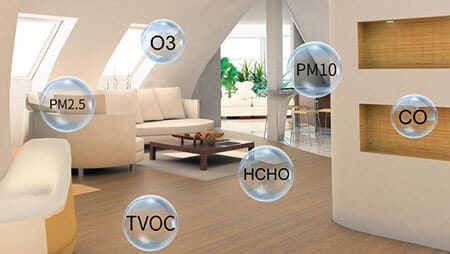
A modern living room interior with various air quality indicators labeled throughout the space, including O3 (ozone), PM10 (particulate matter), PM2.5 (fine particles), CO (carbon monoxide), HCHO (formaldehyde), and TVOC (total volatile organic compounds). The room features contemporary furnishings, large windows, wooden flooring, and potted plants, illustrating common indoor air pollutants and their sources in a residential environment.

Questions to Ask and What the Process Looks Like

Improving air quality starts with an assessment. We begin with a visual duct inspection, static pressure test, filter evaluation, and humidity reading. If needed, we recommend targeted upgrades rather than a full-system overhaul. Ask a professional:
  • What is my system’s rated airflow and current static pressure?
  • Can my furnace or air handler support a MERV 13 filter?
  • Is humidity within the 40 – 50% range?
  • Are ducts sealed to prevent attic dust intrusion?
One homeowner added three portable purifiers but still experienced symptoms. Testing showed 65% indoor humidity and mold growth on the coil. Installing a whole-home dehumidifier and cleaning the coil resolved the issue within weeks. Costs vary depending on scope. Professional duct cleaning in this area may range from $400 to $900. Installing a media filter cabinet could start around $300 to $800. Whole-home dehumidifiers often fall between $1,200 and $2,500 installed. Pricing fluctuates based on site complexity, material costs, and total scope. These figures are preliminary benchmarks for informational purposes only and do not constitute a binding quote. An on-site evaluation is required for a final proposal. Most upgrades take one day, while comprehensive air-quality improvements may span two to three days.

Get Expert Guidance Before You Upgrade

Air quality improvements should match your HVAC system’s capacity and your home’s specific conditions. Upgrading filters without checking airflow or adding equipment without addressing humidity can create new problems instead of solving allergies. We evaluate filtration, airflow, duct integrity, and moisture levels together so each recommendation supports the whole system. Our team works with Boerne homeowners to prioritize upgrades that deliver measurable improvements in comfort and respiratory health – not just marketing promises. Before investing in new equipment, schedule a professional assessment to identify what will make the biggest impact in your home.

FAQs

In Boerne, cedar pollen is a major trigger, especially during winter and early spring. Pollen enters through open doors, windows, and small duct leaks in attic spaces. Once inside, it circulates through the HVAC system and settles in return ducts and on evaporator coils. High humidity can also worsen air quality by supporting mold growth, particularly if indoor levels exceed 55%. We often find that clogged or low-efficiency filters allow pollen to pass through and recirculate. Leaky return ducts are another common contributor, pulling in dusty attic air. Addressing filtration, sealing ducts, and controlling humidity together typically produces noticeable relief within weeks.
A higher MERV filter can significantly reduce airborne pollen and dust, but only if your HVAC system can handle the added resistance. Many residential systems are designed for MERV 8 – 11 filters. Installing a MERV 13 or higher without checking static pressure may restrict airflow and strain the blower motor. We measure total external static pressure before recommending upgrades. In many homes, adding a 4-inch media cabinet allows higher-efficiency filtration without airflow loss. Filtration works best when combined with duct sealing and humidity control rather than as a standalone fix.
Costs depend on the level of improvement needed. Basic duct cleaning may range from $400 to $900. Upgrading to a media filter cabinet might start around $300 to $800. Adding a whole-home dehumidifier could range from $1,200 to $2,500 installed. Comprehensive solutions that combine multiple upgrades can increase total investment. Pricing fluctuates based on site complexity, material costs, and total scope. Larger homes with extensive ductwork or accessibility challenges may cost more. These figures are preliminary benchmarks for informational purposes only and do not constitute a binding quote. An on-site evaluation is required for a final proposal.
Homeowners can take helpful steps such as replacing filters regularly, keeping windows closed during high pollen days, and using portable HEPA purifiers in bedrooms. Monitoring humidity with a digital hygrometer is also a practical DIY action. Professional help becomes important when airflow issues, high humidity, or duct leaks are present. Measuring static pressure, sealing ducts with mastic, or installing integrated dehumidifiers requires specialized tools and training. If symptoms persist despite basic maintenance, a professional assessment can identify system-level causes that DIY efforts often miss.
Watch for reduced airflow from vents, increased dust accumulation on furniture, musty odors, or frequent filter clogging. Allergy symptoms that worsen indoors can also signal filtration or humidity problems. From a mechanical standpoint, ice forming on the evaporator coil or short cycling may indicate restricted airflow from clogged filters. High indoor humidity can lead to visible mold near supply registers. Addressing these issues early protects both your health and the HVAC equipment from long-term damage.
Yes. Many Boerne homes have ductwork routed through unconditioned attics. If ducts are poorly sealed, they can draw in insulation fibers, dust, and pollen. Seasonal humidity spikes also increase the risk of condensation on metal ducts and coils. We frequently see return plenums with small gaps that pull in attic air. Sealing these areas and ensuring proper insulation significantly improves air cleanliness and system efficiency. Cedar pollen during peak season can overwhelm low-efficiency filters quickly, making regular inspections especially important here.
Look for contractors who follow recognized standards such as ASHRAE guidelines for filtration and NADCA standards for duct cleaning. Ask whether they measure static pressure and humidity rather than relying on visual inspection alone. Proper licensing, liability insurance, and clear written estimates are essential. A reputable professional should explain how each recommendation affects airflow and equipment performance. Avoid providers who promise instant results without testing or who push expensive add-ons without evaluating your HVAC system.
Schedule service if you notice persistent allergy symptoms indoors, visible mold growth, musty odors, or repeated airflow problems. These signs suggest system-level issues that routine filter changes may not solve. While this isn’t typically an emergency service, delaying improvements can increase mold risk and strain HVAC components. If humidity exceeds 60% for extended periods or filters clog unusually fast, arrange an evaluation soon. Early intervention helps prevent higher repair costs and prolonged discomfort during peak allergy season.