Green Air Duct Club · San Antonio Since 2009

AC Coil Cleaning in San Antonio — Why a Dirty Coil Costs You More

Your AC has two coils — and both need to be clean to work right.
Coil cleaning addresses the surfaces where your entire system’s heat transfer either succeeds or fails. Any coating — dust, pollen, biological film — acts as insulation. It doesn’t stop the system running; it just makes it work significantly harder to reach the same result, and that shows up on your bill. We clean both coils, every visit. Rated 4.8★ across 283 Google reviews.
Two Coils, One Pathway

Your AC Has Two Coils — and Both Need to Be Clean to Work Right
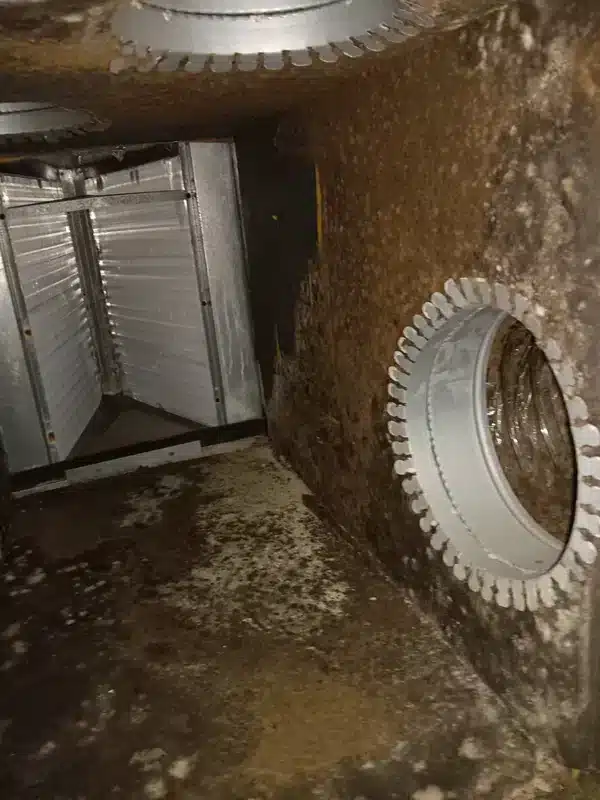
The evaporator coil — the indoor coil inside your air handler — is where refrigerant absorbs heat from your home’s air. The condenser coil sits in the outdoor unit and releases that heat outside. Both depend on direct, unobstructed contact between refrigerant and air. A coil that’s 30 percent fouled doesn’t perform 30 percent worse and stop there — it forces longer run cycles, elevated refrigerant pressures, and increased motor load, all at once.
A Two-Coil Problem

San Antonio’s Pollen and Humidity Create a Two-Coil Problem

The climate puts pressure on both coils at once — from two completely different directions.
The condenser faces the outdoors from February through May — peak cottonwood and live oak pollen season. Pollen and organic debris from the Hill Country edge coat the fins fast; during heavy weeks, buildup can restrict outdoor airflow within days. The evaporator faces a different threat: a cooling season that runs the better part of the year, with dew points regularly above 65°F. A coil that never fully dries between cycles develops biological film that cuts heat-transfer efficiency — and often produces the musty odor homeowners notice at startup.
One coil cleaned without the other leaves the efficiency problem only half resolved. Both are part of the same heat-transfer pathway.
From The Field · Ori Tarzi, Founder

What I Found When We Started Cleaning Both Coils Every Time
“Early on, I’d get calls from homeowners whose system had already been serviced that season. The outdoor unit looked good, but the bills hadn’t dropped and the system still ran longer than it should. The pattern was clear fast: the previous service had done the condenser only — easy access, visible results — and the indoor evaporator coil hadn’t been touched.
A Stone Oak homeowner’s two-year-old system was pulling 20 percent more runtime than it should for the square footage. The condenser fins were clean. We opened the air handler and found an evaporator coil coated in a gray-tan film — fine particulate, cedar pollen, and biological buildup from two summers of high-humidity cycling.
We cleaned both coils in the same visit. Within two billing cycles she sent a photo of her utility bill — the difference was visible. That shaped how we work: both coils, every time. It’s not a line item — it’s the only way the job actually solves the problem.”
Ori Tarzi
Founder, Green Air Duct Club
Age Isn’t the Variable

Coil Cleaning Works Even If Your System Is Fairly New

“My system is only four years old — do I really need coil cleaning?” Yes, and equipment age isn’t the deciding variable. A four-year-old San Antonio system that runs ten months a year has more thermal cycling hours than an eight-year-old system in a city that runs AC for five. A condenser here accumulates cottonwood fluff, cedar debris, and pollen-season particulate whether it’s two years old or twelve, and coil fouling can push refrigerant pressures outside the manufacturer’s range on a unit with no mechanical issues. Cleaning both coils restores the system to its design operating parameters — regardless of age.

What Every Visit Covers

Our Coil Cleaning Commitments for Every San Antonio Visit

We clean both coils as part of one service visit — no incomplete half-measures.

Evaporator Coil Cleaning

Applied cleaning agent, full fin-face coverage, rinse or no-rinse formula chosen by coil condition and air handler position.

Condenser Coil Cleaning

Exterior fin rinse, applied coil cleaner, full fin-row coverage — including the coil face you can’t see from the top of the unit.

Fin Straightening

Bent aluminum fins restored to upright. Airflow through a coil with crushed fins is reduced even after cleaning.

Drain Pan Inspection & Flush

Biological buildup in the condensate pan is cleared before it causes a drain-line clog or overflow.

Refrigerant Pressure Check

Operating pressures verified after cleaning to confirm the system runs within its manufacturer’s specified range.

Post-Cleaning System Run

We run the system and verify supply and return airflow are consistent with expected output before we leave.

The Protocol

How We Execute AC Coil Cleaning

A consistent three-phase protocol — diagnostic, cleaning, verification.
01

Diagnose Both Coils First

We access both coils before cleaning. The condenser is inspected from all four sides, not just the visible face. The evaporator cover comes off to assess the full surface, drain pan, and fins. We record refrigerant pressures as a baseline and note the fouling type — light accumulation, compacted debris, or biological film each respond differently.
02

Clean Each Coil for Its Fouling Type

The condenser gets an applied foaming cleaner sized to the debris — pollen-season organic buildup lifts with a different formula than compacted construction dust — and fins are straightened after. The evaporator gets a no-drip or rinse formula based on air handler orientation and drain access. The pan is flushed. Both surfaces are fully cleaned before verification.
03

Verify Performance

We run the system and take return and supply air temperatures; the differential across the air handler confirms heat transfer is restored. Refrigerant pressures are re-checked against the pre-cleaning baseline. We confirm the system runs within its manufacturer’s operating range before closing the visit.
Where We Clean Coils

Coil Cleaning Across San Antonio & Bexar County

We serve homes and light commercial properties across the metro — the Medical Center corridor, Stone Oak, Alamo Ranch, Leon Valley, Helotes, Converse, and northeast and southeast Bexar County — plus properties along the 1604 loop, the Southside near Brooks City Base, and the near-northside zip codes. Same-day scheduling is available when the calendar allows.
Bexar County & Surrounding Communities
Available 24/7

Ready to Get Both Coils Cleaned?

If your utility bill is climbing without a clear cause, or your system runs longer than it used to, coil fouling is worth ruling out before any other diagnosis. We’ve cleaned both coils in San Antonio homes since 2009 — 4.8★ across 283 Google reviews — available any time.
Prefer email? Reach us at gr*****************@***il.com. Available 24/7 across the metro.
Common Questions

AC Coil Cleaning in San Antonio: FAQ

Most San Antonio homes benefit from coil cleaning every one to two years. The extended cooling season, high pollen loads from Ashe juniper and live oak, and elevated summer humidity accelerate fouling on both coils faster than manufacturer maintenance schedules — which assume average U.S. operating conditions — typically account for.
The evaporator is the indoor coil inside your air handler; it collects biological film and fine particulate drawn in through the return. The condenser is the outdoor coil; it collects pollen, cottonwood fluff, and airborne debris. They foul differently and need different agents and techniques — cleaning one without the other leaves the heat-transfer pathway only partially restored.
In most cases, yes. A fouled coil forces the system to run longer to reach setpoint, which means higher electricity use. Once both coils are clean and heat-transfer efficiency is restored, the system reaches setpoint faster and shuts off sooner. The reduction depends on how fouled the coils were before the visit.
A standard two-coil visit — both coils, fin straightening, drain pan flush, and post-cleaning verification — typically takes 90 minutes to two and a half hours. Difficult air handler access or heavily fouled coils may take longer. We don’t close the visit until the system has been run and verified.
No. Coil cleaning focuses on the evaporator and condenser surfaces, drain pan, and refrigerant pressure verification. A full AC cleaning also covers the blower wheel, cabinet interior, and drain line. If your concern is heat-transfer efficiency and utility costs, coil cleaning addresses that directly; if the system hasn’t been serviced in years, the broader clean may fit. We can assess which is right during the visit.
Yes. A heavily fouled coil forces refrigerant pressures outside their design range, and sustained high-side pressure stresses the compressor — the most expensive component in the system. Over time, compressors that run consistently outside their rated range fail earlier. Coil cleaning protects the compressor, not just efficiency.